

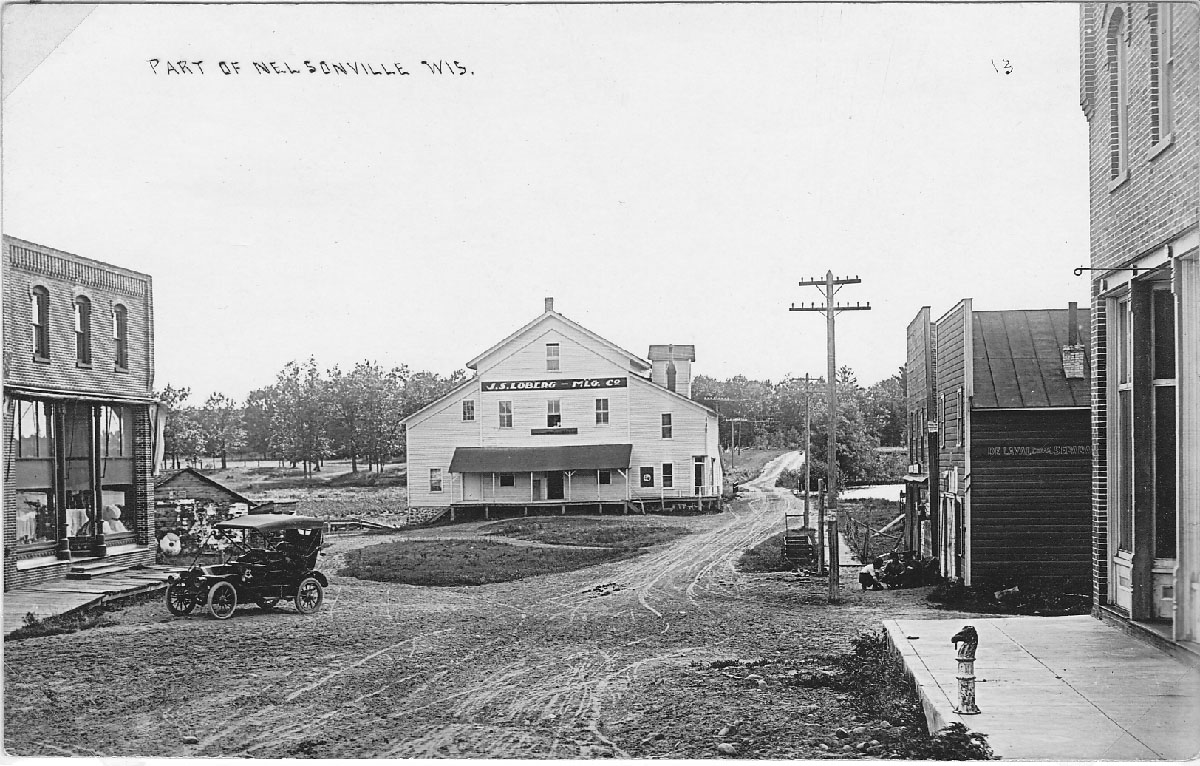
Early view of First Street.
The following article was written by Susan Allen in 1992.
By SUSAN ALLEN |
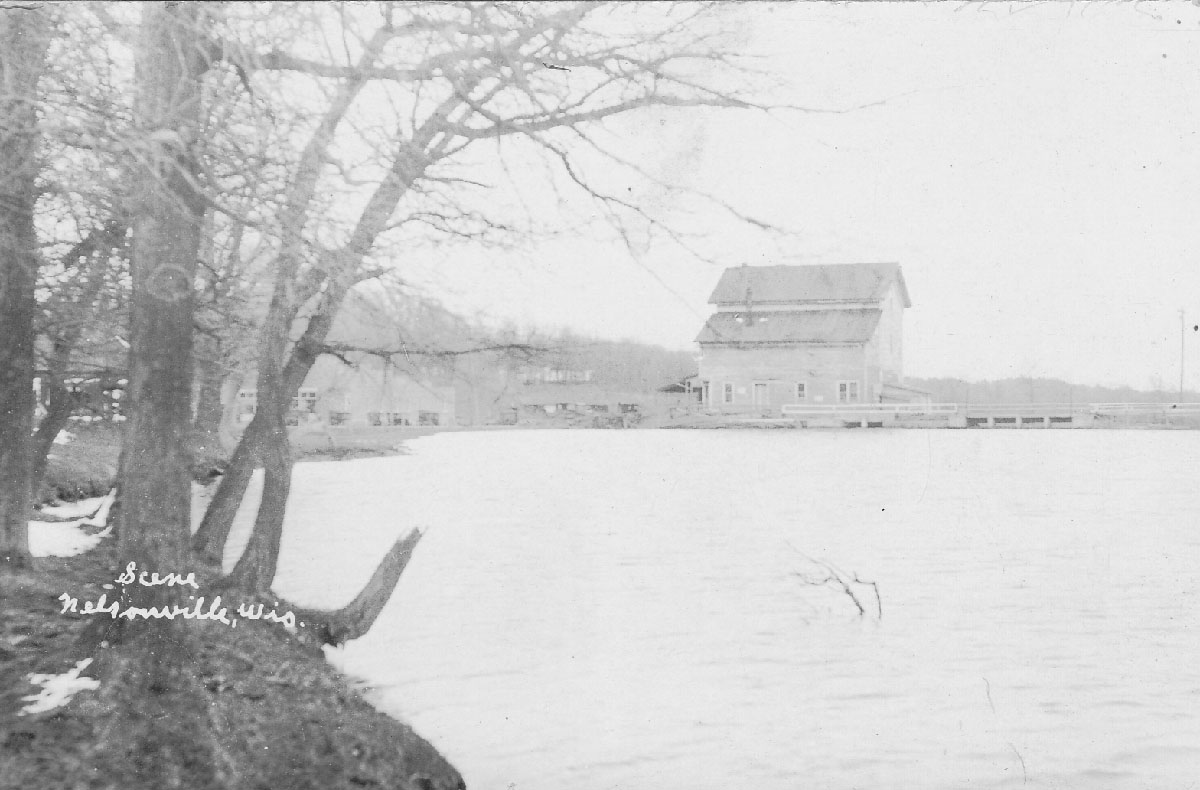
 When the creamery closed in the mid-1960s, the
  At the time of its incorporation, there were 177 people living in the village, slightly more than the 171 people that live there today. But not only has the population dropped off slightly, so have the businesses along the community’s main street. “There have been dramatic changes in terms of what the (the village) used to be - really dramatic,” Gordon said.
  The following History of Nelsonville was sent to the PCHS by Pat Raddatz, the Librarian at Amherst. According to Ms. Raddatz the History “was written in the 1930’s by Donna Nelson and members of her class at Jerome Nelson Graded School. Harvey Raasoch was the principal at the time and helped the class with their research. I have put the names of current residents and places in parentheses with the help of Cassie Raasoch. The rest of the history is the way it was written then.” In addition, Ms. Raddatz has updated the manuscript through 1978 by attaching several items taken from local newspapers.
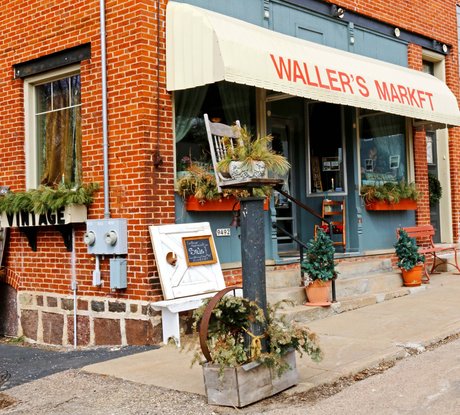
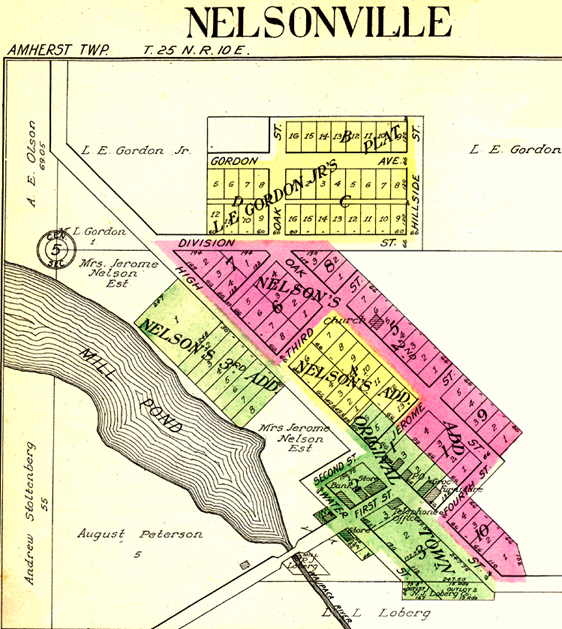
The next store to be built was a little frame building which stood where the present Henke and Melum warehouse is now. (Just below the building across from the post office) Mrs. Joseph moved down from Benson Corner and operated this store. She also became Nelsonville’s first postmaster. The next business to be built was a saloon on the corner by Henke and Melums. (Wallers) It was a one story garret and the children used to like to watch the different saloon keepers crawl up an outside ladder and through a little opening in the garret to sleep. A shoemaker shop was built by August Peterson. This was the first business place on top of the hill. This old shop still stands and is the present central office. Mr. Peterson became the second postmaster and held this position for nearly forty years. Mr. Iverson, a blacksmith now moved to town and built a blacksmith shop where the present shop now stands. (Across from Faivre’s) He also built a home which is now occupied by Sherman Floistad. (Viola Waller) |
 The little board schoolhouse stands today, but it has been moved a few rods to the Christianson property. (Cairns) A plank bench was built around the wall and served as seats in this little one room schoolhouse of about fifteen by twenty feet, which was built of single boards. Another plank built about four feet high around the room served as a book rest. The scholars sat with their backs to the wall and the stove was in the center of the room. On cold days it blew right through the thin walls and the pupils had to stand in the center of the room to keep warm. Most of the teachers were English from down east. Besides Miss Nelson we find such English names as Sue B. Webster, Helen Holly, and one German teacher by the name of Schult who could hardly speak English was also hired for one term. A little later a Norwegian by the name of Sarah Anderson taught.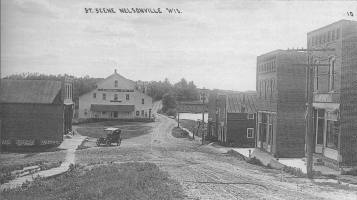
 In 1914 a garage was built by Theo H. Johnson next to Carl Loberg’s general store but was destroyed by fire in 1933. Palmer Severson built a garage across from the creamery a few years later. (Next to George Lees station)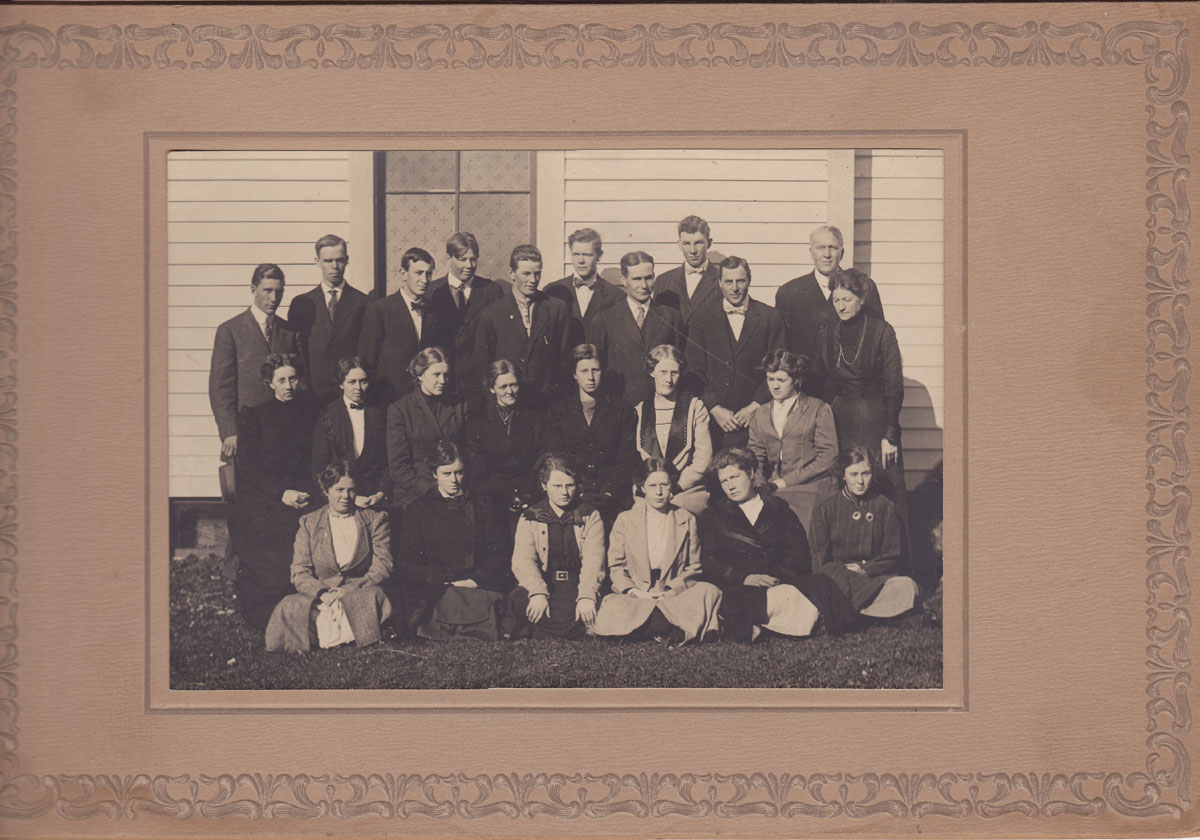
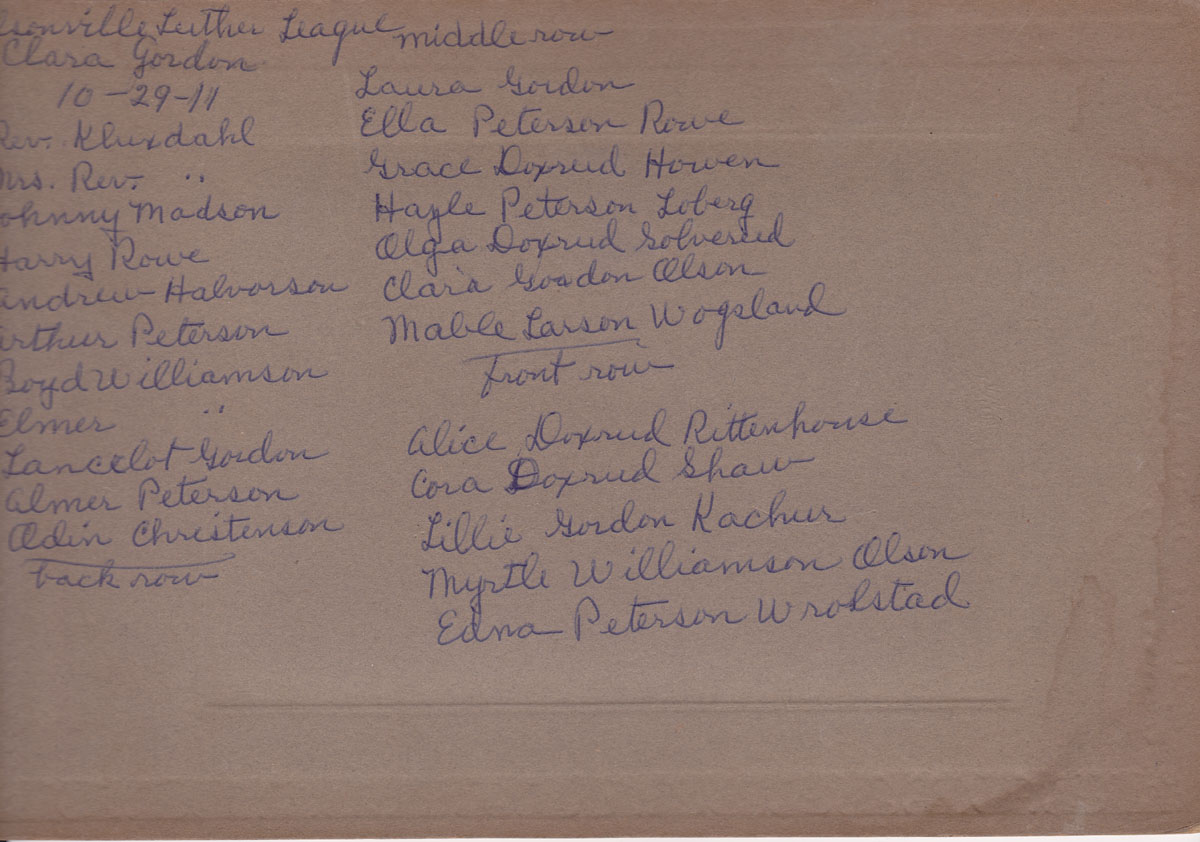 Nelsonville is still much of a Norwegian village with only one family that cannot trace its Scandinavian ancestry in at least one member of its family. During this depression Nelsonville had at any time only one family on the relief rolls. This does not mean that everyone in the village is well fixed or has a job but that many families have struggled to get along on a great deal less than many people who are on relief rolls of other villages.
 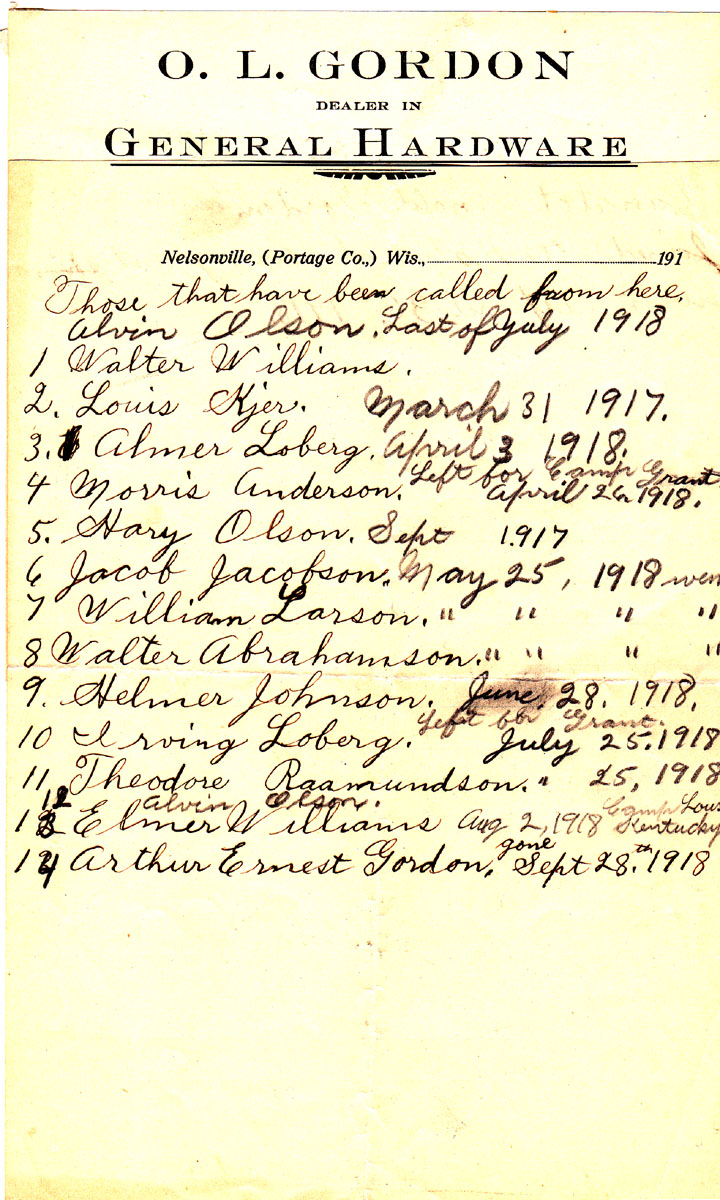 1963 - Seventy five years of Grace was the theme of the Diamond Jubilee held at Nelsonville Lutheran church on Sunday June 23. The Nelsonville Norwegian Evangelical Luthern Church was organized on Dec. 15, 1887. Most of the members had been affiliated with the New Hope congregation and consent was given to them for the separation. Rev. K. O. Eidahl was to serve Nelsonville as its pastor as well as Alban and New Hope congregations. He remained as pastor until his resignation in 1904. Rev. G. Kluxdahl then served the congregation until October, 1911 when the congregation joined Amherst in calling Finn Magellson.